































Each year, endangered sea turtles, often tangled in fishing line or debris left behind by people, are pulled from Southern California waters. Thanks to a new sea turtle rehabilitation area at Aquarium of the Pacific in Long Beach, more of those turtles now have a second chance at recovery and release.
The new 4,000-gallon facility doubles the nonprofit’s capacity to treat sick, injured and stranded turtles found in Los Angeles County — and beyond — before returning them to the wild. Although the aquarium has been rescuing and caring for sea turtles for more than 25 years, this marks its first dedicated rehabilitation space.
“We are looking forward to utilizing this new area to expand our care of rescued sea turtles, while encouraging the public to learn more about them and their conservation,” says Lance Adams, DVM, the veterinarian at the aquarium.
How Aquarium of the Pacific rescues sea turtles
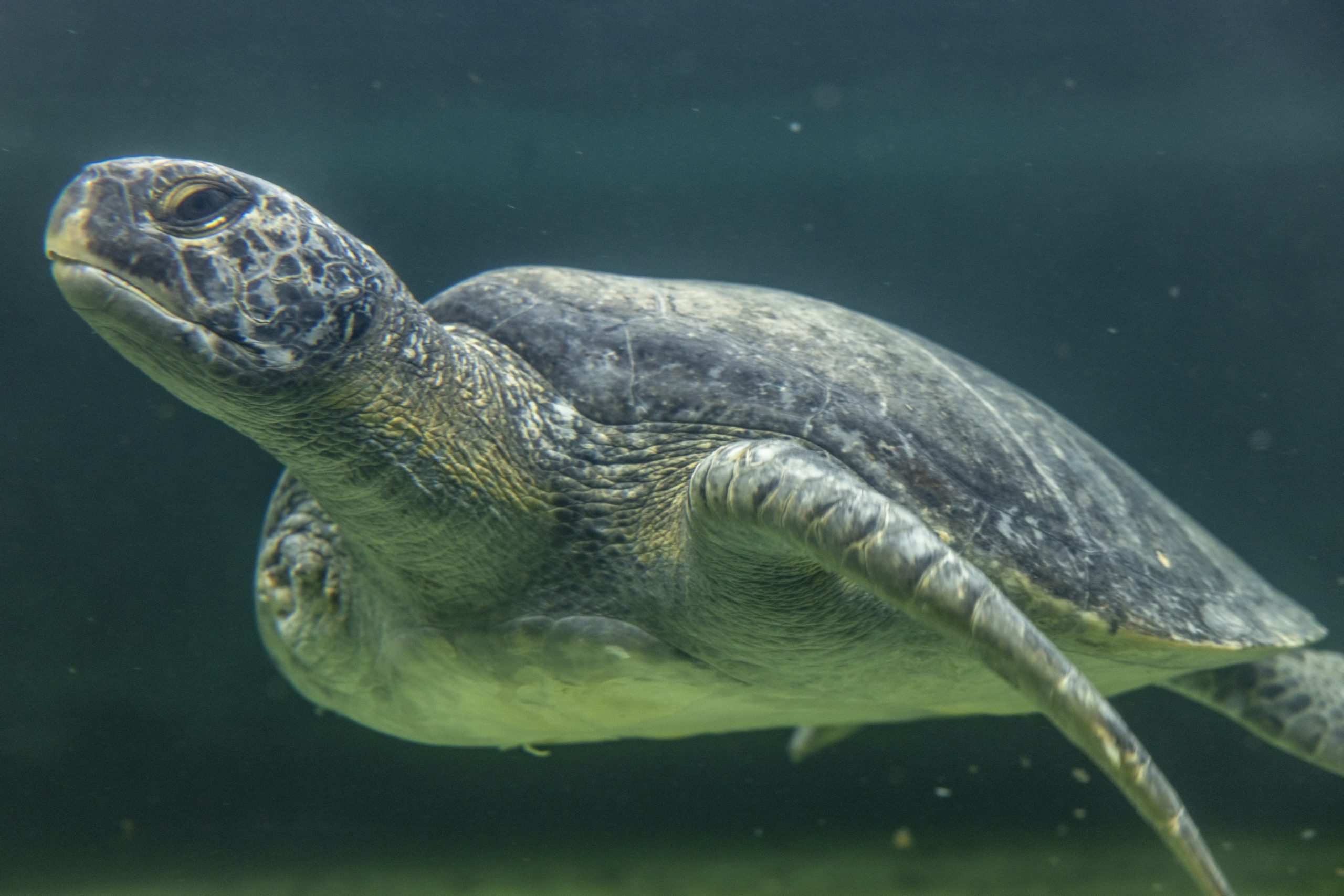
The first resident of the new sea turtle rehabilitation pool was a green sea turtle found last March. Fishing line was wrapped tightly around the sea turtle’s front right flipper, cutting off its blood supply and resulting in a severely infected wound. The aquarium’s veterinary staff performed surgery to remove the flipper, saving the turtle’s life.

Staff also discovered a fishing hook embedded in the turtle’s neck, near the esophagus, and performed a second surgery to remove it. Eleven months of rehabilitation later, the turtle has recovered from its life-threatening injuries and is thriving and swimming confidently with its three flippers. At the time of this writing, staff was planning to release the turtle back to the wild in a few short weeks.
Your children might be eager to know this turtle’s name and gender, so I asked Nate Jaros, vice president of animal care. “We are reasonably certain that this turtle is a female, based on the relatively short tail,” he said. “We believe this turtle is still young, so it is possible the tail will grow, but as of now, we do think it’s a female. As for the name, we don’t publicly name the turtles. These are wild animals who will return to the wild, so we don’t want them to be seen as pets.”
Adams estimates the sea turtle is 15 to 20 years old and is considered sub-adult. Green sea turtles are considered adults in the 20- to 25-year-old range. “We could do an ultrasound to accurately determine gender, but that was not a priority. The priority was survival.”
On Jan. 14, sea turtle volunteer monitors, who document the activities of endangered green sea turtles residing in the San Gabriel Watershed, located a second sea turtle that was also entangled in fishing line and rope in the San Gabriel River. They contacted aquarium staff, who rescued the turtle and hope to be able to preserve its wounded flipper.
In addition to providing care for the sea turtles, Aquarium of the Pacific volunteers track local sea turtle activity through the Southern California Sea Turtle Monitoring Project. Photo identification and recorded data from the aquarium’s community scientist volunteers contribute to the understanding of sea turtles in our local waters and how we can help them and other species along our coastline.
Once volunteer monitors locate a sea turtle in distress, Aquarium of the Pacific staff first evaluate the turtle in the field before bringing it to the aquarium for a physical exam — including checking for trackers or tags — and to receive medical care. All rescued turtles are allowed to recover in a safe environment appropriate for the level of care they need at the time. Once the sea turtle passes its final physical exam, it is released back into the wild.
Visitors to the new rehabilitation pool and/or Shark Lagoon will see the Molina Animal Care Center, an 1,800-square-foot hospital and examination area. Visitors can watch through the windows as staff work with resident marine life. There are also interactive kiosks and live feeds of veterinary staff working.
How families can help
Aquarium of the Pacific would like to invite the public to help. If you see a sick or injured sea turtle, call West Coast Marine Mammal and Sea Turtle Stranding Network’s 24/7 hotline at 562-506-4315.
We can also do our part by picking up trash — such as plastic bags that look like food to sea turtles — following local fishing regulations and not discarding fishing lines or hooks in the water. We can also participate in the aquarium’s beach clean-up days and wetlands restoration efforts. The next events are March 7, April 4 and May 2, from 10:30 a.m. to 12:30 p.m. See the website for additional information and to register.

The aquarium offers educational programs for people of all ages, including First Wednesdays featuring a variety of guest speakers. And for kiddos passionate and curious about marine life, there are many other ways to volunteer at the aquarium, including family volunteers. Education Family Volunteers are needed in areas where guests can interact with marine science, including through animal touch pools and educational carts. Family volunteers consist of at least one adult volunteer (parent or authorized adult over 18) with one or two child volunteers (ages 9 and up). Adults and kids volunteer side-by-side to engage guests in ocean science education.
Learn more about supporting sea turtle rehabilitation efforts through the aquarium’s Rescue to Release campaign.
Melissa M. Monroe, Ph.D., garnered honorable mention in Writer’s Digest 2023 Self-Published Book Awards for her book, “Mom’s Search for Meaning: Grief and Growth After Child Loss.”She is a mom, writer and licensed acupuncturist in L.A. Her recent work has appeared in L.A. Review of Books, New York Times, Slate, Well+Good, Backpacker and Insider.