


























As AI changes how children learn, parents and educators can help kids develop the human skills technology can’t replace, from empathy and integrity to grit and curiosity.
In 5th grade, annoyed that I had to write a short biography of Thomas Jefferson, I copied several paragraphs from a book I imagined the teacher could not possibly know. Days later, Mrs. Brown praised my paper, reciting it to the entire class. At the end of the reading, my so-called friend, Tom H., announced, “That’s from “The World Book Encyclopedia!”
Yep, I failed the assignment, my parents were called in, and I vowed never to speak to Tom the Snitch again. Over time, though, I discovered that I preferred the honor of doing my own work — and that cheating was not as easy as I had thought.
Today, artificial intelligence is replacing much of the thinking and practicing our children do in and out of school. AI tools are so widely available that it’s becoming harder to define what doing one’s own work looks like. And if AI can increasingly do the “smart” stuff, what should we be teaching our young kids to do better?
I believe we can use this time to focus on what makes us human, pouring our efforts into helping our kids cultivate curiosity, creativity and competency in these fast-changing times.
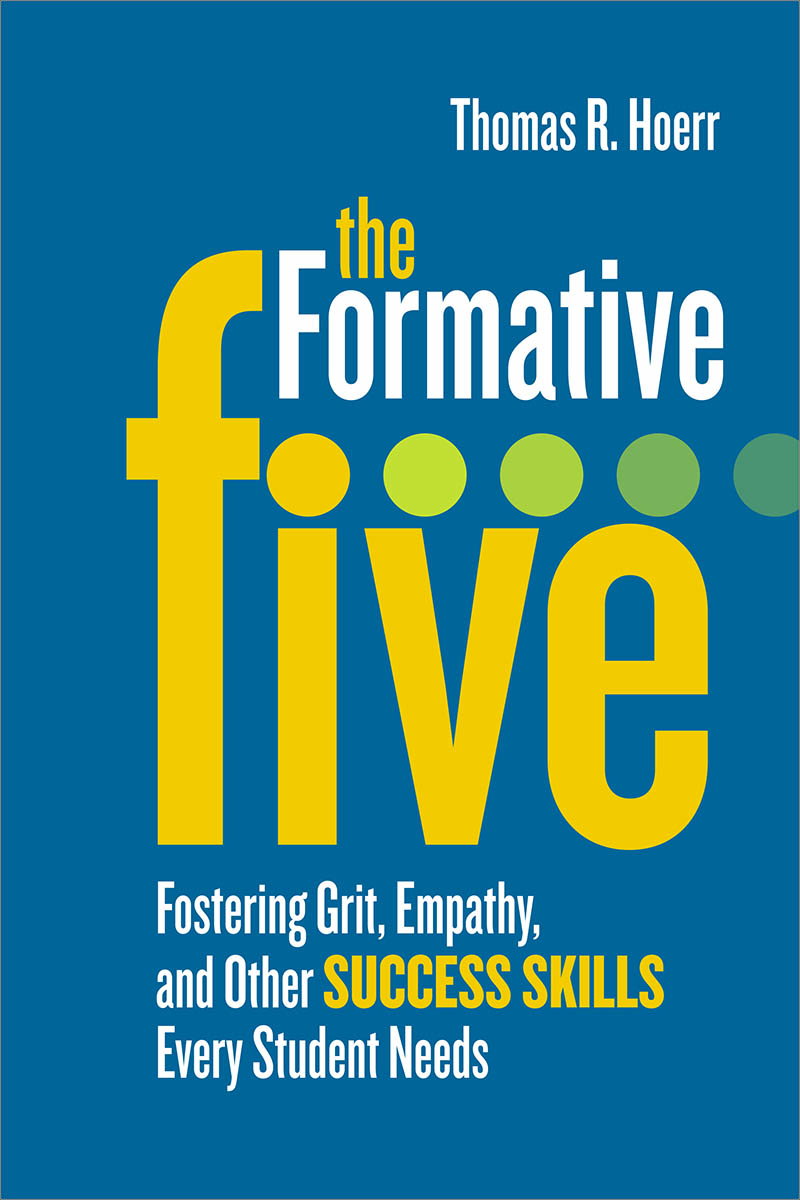
As a teacher constantly searching for ways to build up students, I recently discovered a book that can help parents and educators alike: “The Formative Five: Fostering Grit, Empathy, and Other Success Skills Every Student Needs (ASCD)” by Thomas R. Hoerr, Ph.D. Although aimed at educators, the book’s tenets guide parents in partnering with instructors to deepen the five key skills: grit, empathy, self-control, integrity and embracing diversity.
Empathy: The skill ChatGPT can’t teach
Hoerr defines this empathy as “learning to see the world through others’ perspectives. I want to be around people who are kind and caring — who understand me and know how I am feeling. When I sense that kind of empathy, I feel more confident that we can develop a relationship based on real trust.”
Too often, empathy is skirted in the pursuit of quick results. Technology can burn through tasks, but it can’t replicate how human beings notice the nuances of other people’s needs and perspectives. It cannot replace the positive feeling we have when we make others feel trusted and acknowledged.

Hoerr suggests fostering empathy through “discussions on current events, history or literature,” as well as engaging in service learning to help others.
“We treat empathy as a catalyst for action,” says Brad Zacuto, head of school at Westside Neighborhood School in Playa Vista. “Students have the tools and support to see projects with real community impact through — from ideation to testing and launching solutions.”
One example: “The Palisades and Eaton fires hit very close to home for our students, which led one team to partner with the local seed library to create a native plant seed dispensing machine.”
Gratification is not always instant
In a chapter on how to teach children how to develop self-control, Hoerr references psychologist Walter Mischel, originator of the “Marshmallow Test,” the 1970 psychological study where Mischel’s team left preschool children alone in a room with a single marshmallow and gave them a choice: eat it immediately — or wait 15 minutes without giving in to temptation to receive a second marshmallow.
Sounds easy, but self-control, Hoerr writes, “is as elusive as it is important.”
Although teaching our kids self-control can be like herding cats, the challenge is worthy because learning how to delay gratification can result in children getting more of what they really need — such as trust, reciprocity, success and lasting friendship — for the long term.
Ideas for teaching self-control range from helping children develop coping mechanisms (taking a walk, moving onto another task) to learning how to maintain restraint to establishing goal charts for gauging progress (on behaviors such as reducing the times a child speaks out of turn). Reading and discussing books on self-control, such as “David Gets in Trouble” by David Shannon, can be a good indirect method.
Integrity over perfection
“Whereas honesty can be private and innate,” Hoerr writes, “integrity is always public and developed intentionally — when we act with integrity, we are consciously making our personal values known to others.”
AI can now speak/write for our kids, and the mask of social media allows young people to say and do things online they would not say or do in person. Despite the challenges these tech tools present, however, we can guide children to identify who they want to be and how they want to be perceived.
When it comes to using one’s own unique voice, writer Dave Eggers pointed out in a recent NPR interview, “this is the first time in history when a whole generation is being told or tempted to have a machine write for them. But… there’s only one of you. So, to give your voice to a machine — to say, speak for me — is such a crime against yourself.”
We can model integrity for our children by admitting when we make mistakes and emphasizing what our personal expectations are, Hoerr says. Another tactic is asking our children to discuss examples of integrity and lack of integrity of people in the public eye.
Embracing diversity in more than words
Artificial intelligence is not adept at understanding or teaching diversity because it can be so subtle and nuanced. If we teach our children early to see diversity as part of an ongoing practice of curiosity, they will be genuinely and respectfully inquisitive and willing to learn about the differences in how people look, behave and believe.
To do this successfully, Hoerr thinks children must first learn what makes them who they are (culture, traditions, etc.). This is where conversations with family members can be invaluable. Children can also benefit from reading books and seeing media that represent a wide spectrum of backgrounds. Going to concerts and museums, particularly those featuring music and art from other cultures, is a highly effective experiential learning option because it creates in-the-moment questions from children.
Bonus points: Because joy and amusement are baked into the effort, the embracing of diversity develops more naturally.
“Being a diverse community also means we are willing to do the work…having sometimes difficult conversations, affinity groups, shared cultural experiences and providing all members of our community the tools needed to create a positive and collaborative diverse community,” Zacuto says.
“From the very beginning of designs for our new campus, we knew it wasn’t going to be built around screens,” he says. “We built a multitude of collaborative spaces because we know that those skills are the future of leadership.”
Why struggle still matters
Hoerr defines grit as “tenacity, perseverance, hanging in and not ever giving up.” He references Angela Duckworth, a foremost researcher on grit, who has said that grit is a “combination of passion and perseverance for very long-term goals.”
Because technology solves things faster, children are easily discouraged by tasks that take a while or are unique to what they actually think. To combat this, Hoerr suggests introducing the term “good failure” so that students can understand that what matters is how they learn from failing.
This can be a challenge to do in environments in which students believe only a perfect result — such as a top grade — is acceptable. But if parents and teachers acknowledge the value of constant effort, kids will feel more apt to flex personal thoughts that lead to taking pride in thinking for themselves.
Hoerr recommends an assignment that involves students interviewing parents, family members and other adults about their experiences with grit. In this way, children can enhance their communication with family and get real-world examples of why trying hard, failing and getting back up matter.
Curiosity: The skill that empowers them all
For the forthcoming new version of his book, “The Formative Five + One (ASCD),” Hoerr will focus on the skill that did not, in fact, kill the cat.
“Curiosity is a desire to know, to uncover and to experience,” Hoerr explains. “It’s always been the foundation of learning, and that is even more the case in today’s ever-changing environment. Parents and teachers can support curiosity by asking “why” and “what if” questions and modeling that not knowing can be fun because it leads to discovery. Being curious can be inefficient and messy, and that’s OK!”
We keep hearing how AI is inevitable — how it will become faster, smarter and more capable in ways we cannot yet fathom. But the qualities that define humanity still belong to us, to people. The challenge is not to stop a moving train. It’s to decide when we want to get off and connect to each other with kindness, care and respect. It’s pushing ourselves and our children to develop patience with ourselves and others, to do the hard things, even when we can’t do them perfectly. All of it — the failures and the hard-wrought wins — make us deeply and wonderfully human.
Gregory Keer is a husband, father of three, high school educator and veteran writer. Find his columns and more at familymanonline.com.

Activities to Nurture the Human in Our Kids
In an AI-saturated world, deliberately cultivate enrichment opportunities that make kids thoughtful, imaginative, empathetic and connected.
Read
Were you expecting something different for the first suggestion? Reading encourages imagination, empowers children with the vocabulary to articulate how they think and feel and gives them opportunities to step into the shoes of other people with similarities and differences.
- Set aside designated reading time to do alongside your child and discuss the book.
- Go to the library (including the magnificent Los Angeles Central Library).
- Bookstores are popular again. Make a plan to explore a different bookstore each month.
- Encourage your children to read anything that interests them since what matters is the reading in and of itself.
Watch movies together
This is a shared experience opportunity and a great conversation starter. Watch films at home and go to theaters for first-run flicks in addition to screenings at museums and parks. The big (and small) screen provides lots of opportunities to learn the importance of empathy and diversity.
Write in journals and send letters
Everything old is new again. Few activities are more thoughtful and personal than letter writing. Have your child write to grandparents (you know that scores points) and to friends. Instead of typing their letters out on the computer, have them use pen and paper because handwriting works muscle memory.
Journal writing is timelessly useful, and half the fun is picking out a cool journal.
Visit museums
In L.A., there is a museum for everything and every age. And the museum is a place that can be quiet or boisterous, depending on the focus.
Some local museum favorites include Skirball Cultural Center, LACMA (newly expanded), The Broad, Kidspace Children’s Museum and the Petersen Automotive Museum. All help kids think, feel and engage in conversation.
If you can travel to Phoenix, Ariz., I recommend the Musical Instrument Museum (MIM), which takes visitors around the U.S. and world to learn about music from many genres and cultures.
Get out in nature
Escape to your backyard and local, state and national parks to take breaks from technology. Bring sketching materials so the whole family can draw what they see and feel.