






























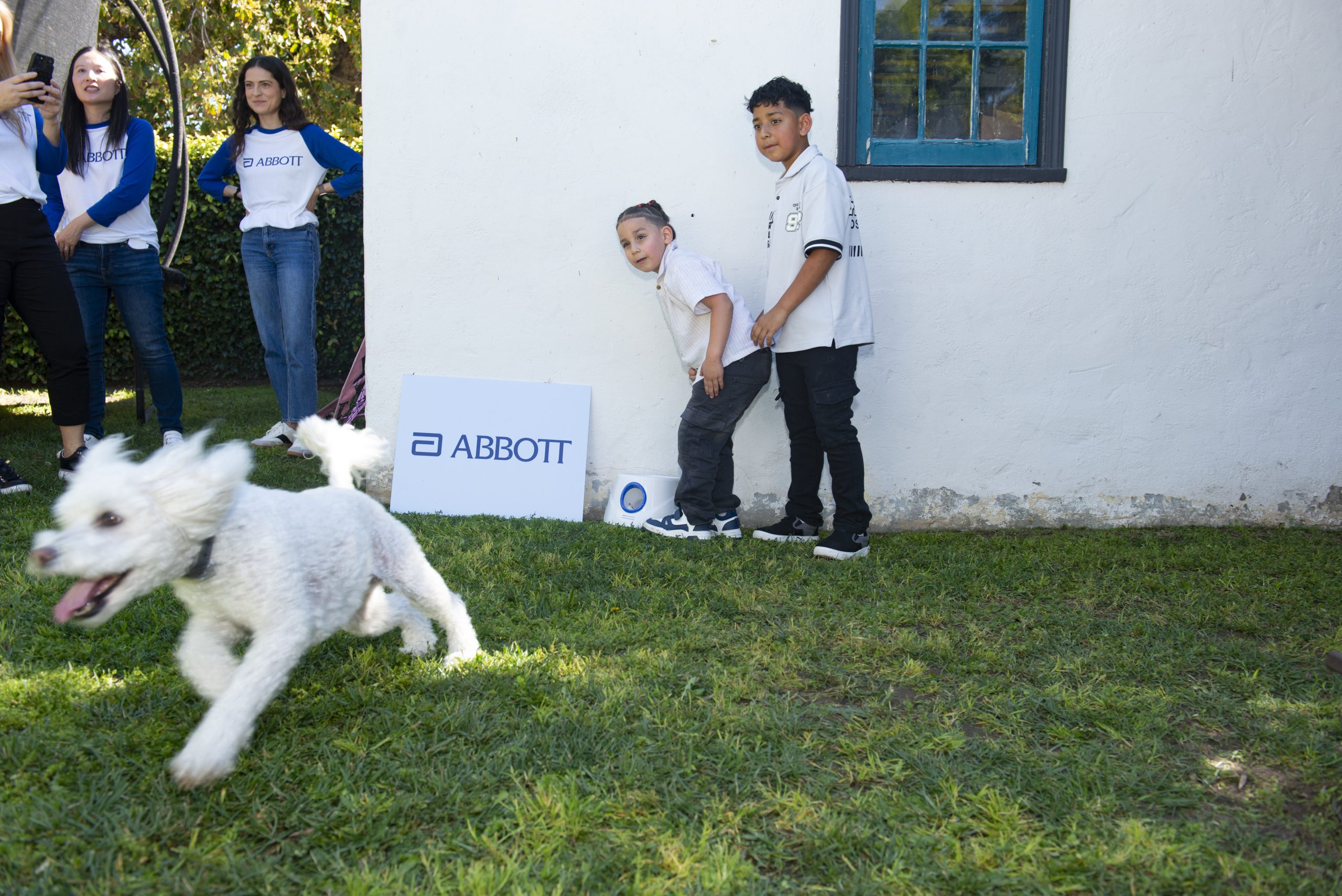
A tail-wagging celebration of heart health unfolded in Westchester on Feb. 27, when toddlers and a tiny poodle mix shared more than toys and treats — they shared a life-saving bond.

Hosted during Heart Health Month by Abbott, a global healthcare leader that helps people live more fully at all stages of life through its portfolio of life-changing medical devices and healthcare solutions, the special playdate brought together Los Angeles-area families and one very spirited 5-year-old miniature poodle mix named Oscar. Each guest of honor was born with a condition called patent ductus arteriosus (PDA) — a hole in the heart that failed to close after birth — and each had been treated with one of Abbott’s minimally invasive heart devices.
A 23-week preemie’s journey to the playground
Among the youngest attendees was 2-year-old Leila, who entered the world at just 23 weeks. Within her first month of life, she received Abbott’s Piccolo device, a tiny implant designed to close the opening in fragile, premature infants without the need for open-heart surgery.
Today, she toddles and plays like any other curious 2-year-old — a joyful milestone her family once could only hope for.
A tiny poodle’s unexpected diagnosis
Oscar’s diagnosis came unexpectedly. Before being neutered, a veterinarian detected a heart murmur. Further testing revealed PDA, a condition that is also among the most common congenital heart defects in dogs. Without treatment, three out of five dogs born with PDA won’t survive past their first year. Oscar received Abbott’s ACDO through a minimally invasive procedure and has since returned to his favorite activities, bounding across the yard and greeting new friends with enthusiastic tail wags.
Patent ductus arteriosus occurs when a temporary blood vessel that helps circulate blood in the womb fails to close after birth. The condition can cause too much blood to flow to the lungs, making it difficult for babies to breathe and, if left untreated, leading to serious complications. A PDA requiring treatment is present in approximately 20% of premature infants.
Before catheter-based devices were available, repairing the defect required open-heart surgery for both children and canines. Advances in minimally invasive technology have dramatically shortened recovery times and reduced risk, allowing patients — whether on two legs or four — to thrive.
Inside the Westchester event space, the medical milestones faded into the background as children and pups played freely, a reminder that innovation in heart care doesn’t just save lives — it restores the simple, beautiful rhythms of childhood.
For families like Leila’s — and for Oscar’s — that rhythm now includes playdates.
Brent Tippen, an Abbott spokesperson and director of Public Affairs shared, “Seeing children laugh and play alongside pups — all of whom are thriving thanks to Abbott devices — underscores a powerful message of hope and why we come to work every day. For families facing a congenital heart disease diagnosis, these moments reflect what is possible when innovation meets compassionate care.”