
































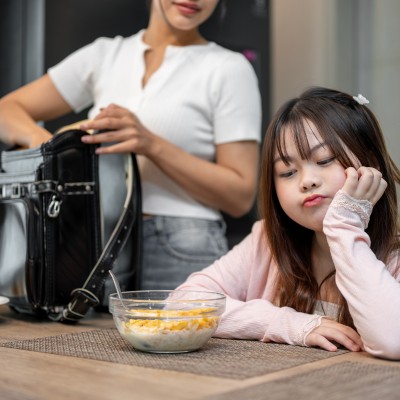
The first time a child refuses to go to school, it can feel confusing — maybe even a little annoying. But when this pattern goes on for days, weeks or months, it can disrupt entire family systems and impact the mental health of the whole family unit. Advice such as “just be firmer,” or “maybe they just need more time,” is often well-intentioned, but it rarely addresses the heart of the issue.
Anxiety-based school refusal is one of the fastest-growing attendance challenges schools are facing today. And despite a strong research base for effective treatment, it remains widely misunderstood.
What school refusal really is
School refusal is more than a child not wanting to go to school. Rather, it is part of a predictable anxiety cycle. A child experiences significant emotional distress related to school — social fears, worries about academic demands or separation anxiety. To escape distress, they begin to avoid school. Staying home or leaving early provides immediate relief, and that relief reinforces their avoidance. Over time, anxiety and avoidance grow, and returning to school feels increasingly impossible.
This pattern doesn’t just affect the school day; it spills into family life, too, impacting work schedules, sibling routines and parents’ emotional well-being. Many parents describe feeling hopeless, isolated and as though they are walking on eggshells around their child.
Why understanding the “why” matters
Effective support begins with understanding why a child is avoiding school. Research by psychologist Christopher Kearney, director of the UNLV Child School Refusal and Anxiety Disorders Clinic, has identified common reasons children refuse school. They may be trying to:
- Escape general distress at school.
- Avoid social or performance situations, such as social conflict or stressful tests.
- Maintain close contact with a parent or caregiver — particularly common with separation anxiety.
- Access preferred activities outside of school, such as video games or social media.
- Or some combination of these.
Without clarity about the underlying function, well-intentioned efforts can, at best, be ineffective, and, at worst, accidentally reinforce the anxiety cycle that needs to be disrupted.
The importance of parental support
When a child is distressed, parents naturally want to help and often engage in family accommodation — well-intentioned behaviors that relieve a child’s anxiety in the short term, but reinforce it over time. Some examples include:
- Allowing late arrivals.
- Offering repeated reassurance.
- Picking up early.
- Letting them stay home “just for today.”
Schools may also provide well-intentioned accommodations, such as extended time out of class, excusing anxiety-provoking assignments or allowing frequent phone contact with parents.
While these responses reduce anxiety in the moment, they can strengthen avoidance over time if they are not paired with opportunities for skill-building. The short-term relief teaches the brain “Avoidance works,” and reinforces the message “I can’t handle it.”
Why alignment matters
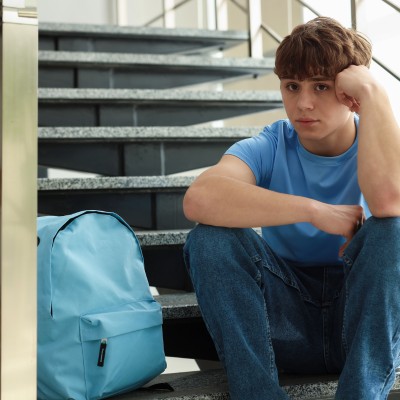
School refusal is not just a home issue or a school issue. It is a pattern maintained across both environments.
Parent-training models such as Supportive Parenting for Anxious Childhood Emotions (SPACE), developed at the Yale Child Study Center, emphasize reducing accommodations while increasing emotional support. Parents learn to communicate confidence in their child’s ability to cope, rather than trying to eliminate anxiety.
When schools and families align around the same approach, children experience consistent expectations and greater success with returning to school.
The power of gradual return
One of the most important pieces of treatment for students who have been out of school, or who have variable attendance, is a structured, gradual return to school.
A sudden full-day expectation often overwhelms a child struggling to manage their anxiety. Instead, research supports using exposure — the systematic introduction of feared situations — a little at a time.
Exposure works because it breaks the avoidance-relief cycle. When a child stays in an anxiety-provoking situation long enough for anxiety to rise and fall on its own, while using taught coping strategies, confidence grows. Over time, the child learns that the situation is manageable; it may have been nerve-wracking, but it wasn’t dangerous.
Gradual return plans may include:
- Predictable morning routines.
- Shortened days that increase over time.
- Temporary reduction in workload.
- Regularly scheduled communication between home and school to assess progress.
What parents can do now
If your child is struggling with school refusal:
- Build a collaborative relationship with your child’s school. Early intervention is key, and intervention starts with everyone being on the same page.
- Seek evidence-based support that emphasizes supporting the parent, not just the child.
- Remember that while school refusal is often a complex problem, it is treatable. There is hope!
Most importantly, shift the goal from eliminating anxiety to building your child’s capacity to tolerate it. Resilience isn’t the absence of distress — it’s the ability to move forward despite it. With early, coordinated and evidence-based support, children can rebuild confidence, re-engage with school and strengthen lifelong coping skills.
Kristen McNeely is a licensed marriage and family therapist and board-certified behavior analyst in Southern California. She is owner of Kristen McNeely Consulting and Family Counseling, a virtual private therapy practice where she specializes in parent support for ADHD, anxiety and school refusal, as well as provides training to both private schools and public school districts. For more, visit kristenmcneely.com.