
























Small, consistent acts can turn the people around us into something more than strangers.
When wildfires, earthquakes and hurricanes hit, we know how to come together to help our neighbors — and even strangers. But once the acute stage of emergencies recedes, we again retreat behind our own doors, fences and cars. How can we make being neighborly a part of our daily lives when nothing is on fire?
“Shared hardship brings interdependence into focus,” says Lucy Rose, a public health and prevention expert and founder of The Cost of Loneliness Project. “Loss and uncertainty tend to strip away surface differences and clarify what communities need to function. These moments can accelerate connection, but they do not guarantee lasting belonging.”
And chronic loneliness is “at an all-time high,” Rose says. “Chronic loneliness … is the experience of moving through daily life without feeling consistently seen, known or emotionally connected. Many people describe it as a quiet ache or a sense that something essential is missing, even when their schedule looks full.”
In this age of remote work, unprecedented worries about the environment and technological advances we once thought were the realm of sci-fi, one antidote to loneliness is to find simple ways to regularly connect with the people who live near us. This hyperlocal community-building can look like neighborhood walk and run groups, clothing swaps, block parties, holiday gatherings, visiting the elderly and banding together to help those in need.
“Hyperlocal connections are gaining momentum because they restore a sense of humanity,” Rose explains. “They allow people to feel seen and supported in real time, within the rhythms of everyday life, rather than waiting for help to arrive from somewhere else.
“Belonging does not come from a single moment of generosity,” she continues. “It comes from repeated experiences of being noticed. Small, low-cost efforts work because they create consistency. Walking together, sharing food, checking in or gathering informally allows people to build familiarity over time, which becomes trust.”
A walk can be enough — or the gateway to more
I grew up in a small town where everybody knew everybody, where kids played outside until the streetlights buzzed on and where it was customary for neighbors to “borrow” cups of sugar and flour when they were running low. When I moved to the sprawl that is Los Angeles, I brought my smalltown ways with me, but most of the connections I made were through group fitness classes and writing communities, not neighbors.
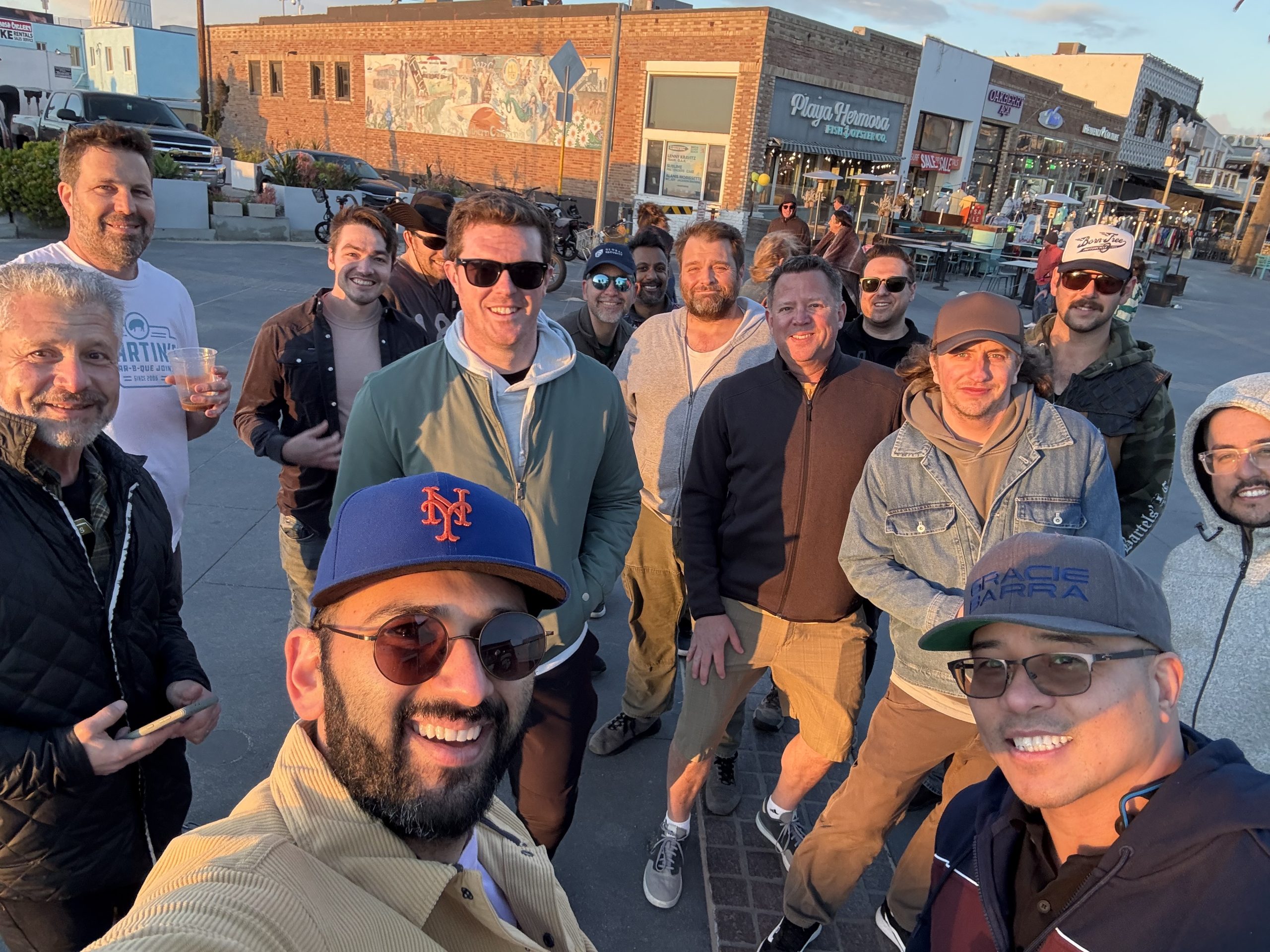
That all changed about a year-and-a-half ago, thanks to a new weekly community walk. Every Monday evening, 30 to 40 neighbors of all ages and ethnicities gather at the same corner, pick mulberries, blueberries and peaches from Dan and Andy’s sidewalk garden (“Dandy’s Farm”), take a group selfie and start walking, avoiding steep hills to make the trek accommodating for all. Usually, the person you start your walk with is not who you end it with; bodies and conversations ebb and flow.
After the walk, there’s an optional potluck with singing and prayer, held in the same backyard for consistency. A long table is laden with kitchen (and restaurant takeout) gems: James’ melt-off-the bone barbecue, Stephanie’s Creole white beans and rice, Vanessa’s creative salads, Connie’s mole and agua de jamaica. I’ve brought a seafood dish and cornbread my grandmama taught me how to make from scratch lightyears ago in Louisiana.
In addition to the walks, there are regular meetings to plan big events: For Halloween, one neighbor made wooden stakes to mark the houses participating in trick-or-treating while another group of neighbors built a maze that marveled kids and adults.
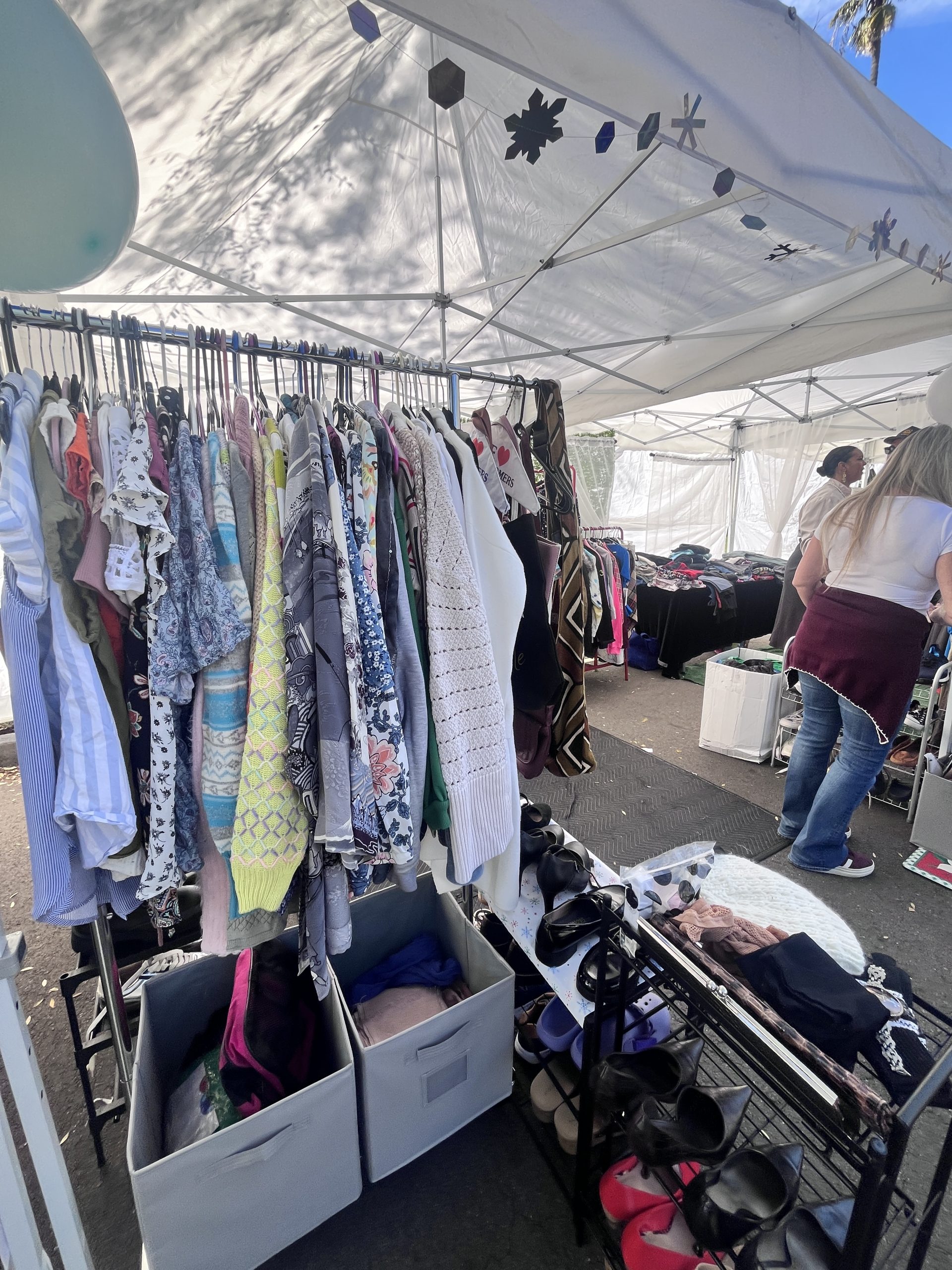
A winter fest block party drew more than 300 people and included not just food, a neighbor’s ice cream truck, neighborhood DJs and a gigantic jumper, but also a used clothing giveaway set up like a vintage boutique and tables promoting the critical work of local nonprofits specializing in everything from immigration rights to eradicating food insecurity. And this year’s Father’s Day barbecue contest (where I found myself serving as a last-minute judge) was a showcase of restaurant-caliber creations, peppered with good old-fashioned (and loud) rivalry.

Even the children and young adults have begun to view themselves as neighborhood builders. Lucas Rivera, 18, and Shiraz Lawrence, 20, took a gap year from college to participate in a yearlong volunteer project as part of their Bahá’í faith, which fosters unity by bringing people of all backgrounds together through grassroots community-building activities, devotional gatherings and classes aimed at collective spiritual and social progress.
“If you’re working on yourself and working on the community, there’s going to be improvement,” Rivera says. “And that improvement is only going to help my college experience and my adulthood be more fruitful.”
For Lawrence, one of the surprises of going door to door to visit neighbors has been discovering how many people are waiting for an invitation. Sometimes, the first conversation happens through a screen door. But after a few minutes, he says, people often come outside and begin talking. “It becomes easier when you realize that people are looking for community,” he says.
Deeply inspired by my neighbors, I started talking to people beyond my South L.A. streets to hear what’s happening in their pockets of Los Angeles. Nina Harada, L.A. Parent’s digital editor, has found connection through a regular clothing swap and a group of parents whose children’s ages are close to her daughters’ ages. And when Jonathan Jacobs moved from Inglewood to the South Bay, where he didn’t know anyone, he launched a walk group called Walking, Talking Men in February 2025. On the website, you can find a guide on how to start a group in your neighborhood.
“I’m all about adult male friendships and community building,” he says. “Men are so desperately in need of connection. We get together every two weeks for coffee, conversation and our steps.”
The stakes are low, which is a breath of fresh air in this competitive culture. “Without the distraction of a sport or challenge, we just get to talk about our lives,” Jacobs says. “We have a lot of parents in the group, especially divorced or single dads. They get the chance to chat about childcare and navigating [other] parental issues. With men, there’s some sheepishness and shyness when meeting new people — what to say, how to behave, posturing. There’s a lot of learned [behavior] of being on guard that we need to work on dropping. I try to help that by modeling my own form of vulnerability and inclusion.”
And the payoff has been invaluable. “It’s given me a community in my community,” he says. “What’s better than that?”
Your children can be doorways to deeper connection
Sometimes, it’s about letting the children lead.
For Jeff and HeidiWienckowski, a flyer in their son’s backpack during the pandemic connected them to a larger community: Cub Scout Pack 911 (part of the Western Los Angeles County Council) in Northridge.
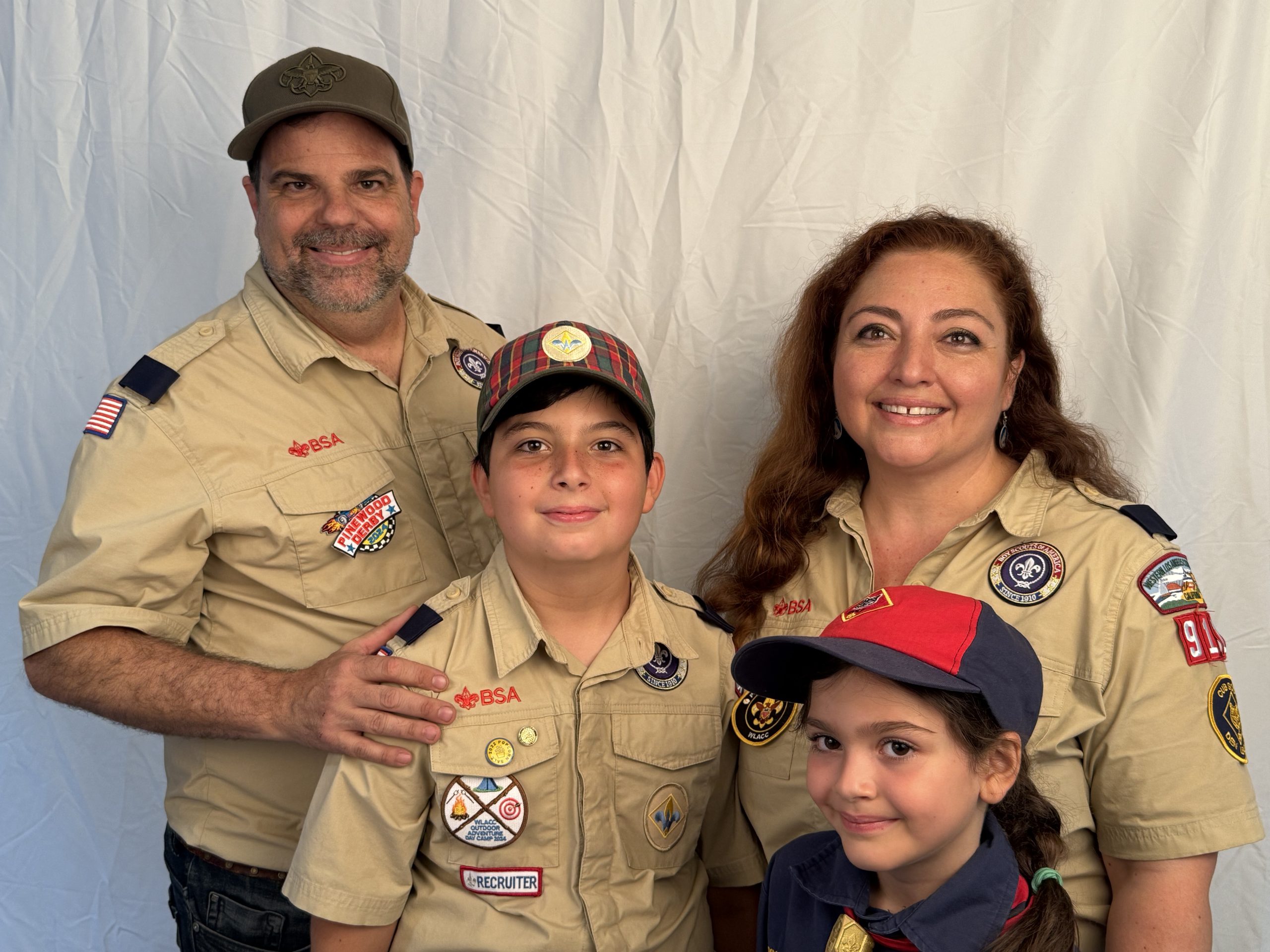
“After COVID, we were looking for something that would get our kids away from screens and into the outdoors, and scouting quickly became something our whole family could do together,” Heidi Wienckowski says. “We started as parents, but before long, we were volunteering and taking on leadership roles. What has meant the most to us is watching our children become more confident, independent and resilient while building friendships and learning skills alongside us.”
Today, Pack 911 brings together more than 80 scouts and 20 volunteer leaders from across Northridge, representing more than 35 cultures, multiple faiths and many different family structures. “It has become a place where families can connect, learn from one another and feel like they belong,” Wienckowski says.
Froswa Booker-Drew, president and CEO of Soulstice Consultancy, specializes in providing philanthropic guidance and community engagement strategies. She stresses that children learn what safe, supportive relationships look like by watching how their parents and caregivers relate to others. “As parents, you demonstrate through relationships how you view the world and others. Is there safety in relationships or constant room for speculation? By creating spaces of belonging, kids know that they are safe and can bounce back because others will be there for them.”
Mindset + action = community
Sometimes community begins with proximity; sometimes it begins with a shared value.
“Community is often misunderstood to only mean a geography, but community can mean places where we gather, people that we are connected to or even spaces that we share commonalities with others,” Booker-Drew says. “This could mean deciding to join an organization or volunteering in your local area to support causes that are meaningful to you and your family.”
The five women from different congregations who came together in 1983 to form the North Hollywood Interfaith Food Pantry (NHIFP) is one example of developing your tribe around a cause. The founders “became alarmed by the increasing numbers of people facing food insecurity as a result of the economic recession in the U.S. during the Reagan administration,” says Pastor Louise Goben, an NHIFP advisor, volunteer and former board chair. “These women felt compelled to care about hungry people in their community. It was that simple: compassion.”
And uniting around a shared vision can help lift us beyond our differences. “We possess the ability to rise above conflicts that often divide us,” Goben says. “It is imperative that we do this, as the very real possibility exists that we can destroy the world. This is not to sound doomsday-ish. Rather, it is a hopeful approach to understanding the goodness that is inherent in all humanity. We work together for the benefit of the whole world.”
Start where you are
Attempting to make a difference on your street — let alone the whole world — can seem daunting and downright impossible. But Naimeh Heath Lawrence, who is Shiraz’s mother and a bright beacon of positivity in my neighborhood, is always reminding us to embrace small steps.
“Be vulnerable enough to take the first step,” she says. “It could just be you and your partner or you and your kid just literally starting on your block. Knock on your neighbor’s door and say, ‘We see each other and we wave, but we really want to know who you are — and we want you to know who we are.’ I think if your intention is really love, people feel that.”
And if your first attempts to reach out are awkward, embrace the imperfection. “Repeated encounters build familiarity,” Rose says. “And familiarity lowers barriers. I have seen communities begin small traditions that create continuity and trust. When loneliness decreases, energy returns. That energy gets redirected into advocacy, creativity and generosity toward others.”
Won’t You Be My Neighbor?
Take a deep breath, push past your comfort zone and try one or more of these ideas to connect with the humans who live near you.
- Invite a neighbor to walk.
- Turn a school pickup into a conversation.
- Start a monthly potluck, book club or cleanup.
- Offer a specific kind of help rather than “let me know if you need anything.”
- Volunteer somewhere your family already cares about.
- Start a weekly lemonade stand with the kids.
- Create a recurring gathering rather than a one-off event.
Cassandra Lane is Editor-in-Chief of L.A. Parent.