
































 If you are the parent or caregiver of a child with autism, you’re likely involved in a slew of activities, from advocating for financial and educational resources to dealing with your child’s communication and behavior issues, making choices about treatments and therapies, and attending intensive therapy sessions with your child. Applied Behavior Analysis (ABA) therapy alone can take several hours a day.
“It can be like a full-time job for the kids, except it doesn’t pay a salary,” says clinical psychologist and board-certified behavior analyst Darren Sush, Psy.D., BCBA-D. Although immensely important and beneficial, it can take its toll on the parent.
Sush began his practice working with children on the autism spectrum, and noticed that there were few resources available to support the parents of these children. So now he devotes his Brentwood-based practice to providing that support, helping parents cope with the stress, anxiety and depression that can sometimes get in the way of family life.
Symptoms of anxiety and depression include:
- No longer finding pleasure in things you used to enjoy,
- Strain in personal relationships,
- Feeling more overwhelmed than usual,
- Restlessness or insomnia or
- Unintentional gain or loss of weight or loss of appetite.
These symptoms can reach into every part of your life, filtering out the good experiences and aspects of your day. “It’s almost as if you have depression sunglasses on,” says Sush. “Just because a child has autism doesn’t mean that child is not a lovable and amazing and skill-filled individual,” but a parent struggling with anxiety and depression will miss those positives, he adds.
Anxiety and depression also make the challenges of parenting – which Sush says are amplified if you have a child with autism – tougher to face. And that’s a reason for parents to seek out the help they need. “By taking the steps toward helping yourself,” Sush says, “you can better manage these everyday stressors.”
In therapy, parents can work to identify where their feelings of anxiety, stress or depression are coming from, learn how they are impacting them and their family, and figure out how to work through them.
Sometimes, even just acknowledging that you need help can be helpful. And if you can find a therapist who has experience with children on the spectrum, that can be a bonus. You won’t have to spend your first session explaining that you spend most of your days driving between and attending therapy sessions, or what it’s like to live with a nonverbal child. “That person actually knows what that parent is going through on more of a fundamental level,” Sush says.
Here are his favorite coping strategies for parents of children with autism:
Find people you trust to talk to. “Often parents of children with autism tend to alienate themselves within their families,” Sush explains. They might distance themselves due to concerns for their child’s safety, worries about how their child will behave, or the attitudes and behaviors of other family members (when your child melts down and Grandma says, “Just tell him to stop it.”). But this robs parents of a valuable source of support. So, seek out a therapist, support group, clergy member or friend who will listen – whether you talk about autism or just about life in general. “Having someone to talk to can be very important,” says Sush.
Tackle one challenge at a time. Parenting a child with autism involves many challenges, and you won’t be able to face everything at once. “It’s like trying to eat all of your Thanksgiving dinner in one bite,” Sush says. “You will choke. Do what you can, when you can. You can’t spin every single plate.”
Remember to breathe. “As the parent of a child with autism, you will see many moments that take your breath away,” says Sush. These will be good and bad. It might be a two-hour tantrum in Target, or having to pull off the freeway because your child is trying to unbuckle his seatbelt. But it might also be your child waving hello to you for the first time, or using a new word. Take a deep breath and celebrate the good, and give yourself credit for surviving and learning from the bad.
Keep a journal. Many parents of children on the spectrum spend time ruminating on information they’ve learned or experiences they have had. A journal gives you a place to collect this information and lets you get it out of your head. “It still exists, but you don’t have to carry it with you,” says Sush. A journal also creates a handy record of things that you and your child have been able to accomplish. It doesn’t have to be a leather-bound volume filled with your best calligraphy. It can be a video journal you create with an app on your phone. “If your journal is a bunch of post-it notes that you keep in a shoebox, then that’s your journal,” Sush says.
Allow yourself to grieve. Parents often feel guilty about this because they feel they are devaluing their child by letting themselves feel bad about their situation, but grieving is necessary. “Saying this isn’t what I expected doesn’t mean you love your child any less,” Sush says. “It’s a natural and normal part of adjusting.”
Remember that being there for yourself is being there for your family. “By finding support for yourself, you’re able to approach struggles with a healthier sense of purpose,” Sush says.

Dr. Darren Sush
So what keeps parents from seeking the support they need? Sometimes it is the stigma associated with depression and other forms of mental illness. Sometimes they feel guilty spending time and money on therapy for themselves, rather than devoting those resources to their child. “It’s definitely a guilt-ridden decision,” Sush says. Some insurance plans do cover therapy, but parents have to be advocates for themselves.
Sush wants parents of children with autism to remember that seeking the help of a therapist doesn’t mean you are doing anything wrong. In fact, you are probably doing a million things right – and don’t even know it because of the filter of anxiety and depression, those “depression sunglasses.” Therapy isn’t there to fix anything you are doing wrong. As Sush says: “This can be something that can help you through all the things you’re doing right.”
Christina Elston is Editor of L.A. Parent magazine and Your Child With Special Needs. You can learn more about Dr. Darren Sush and his practice by visiting www.drdarrensush.com.







 Choosing a childcare provider can be one of the most important decisions parents can make, particularly during the years before a child starts kindergarten. The number of available options can be overwhelming, and it is easy to be tempted to go with the first recommendation from a friend or neighbor. But experts warn that a childcare solution that works for one family might not work for yours. Here are some tips to help you find the right fit for your family.
 If you end up seeking childcare outside your home, you’ll need to decide whether a family childcare facility or a childcare center works best for your family.
 “The best and biggest benefit to hiring a nanny or babysitter is convenience,” says Katie Bugbee, senior managing editor and parenting expert for Care.com, an international online service that connects families with care for children, seniors, pets and homes. “The nanny comes to your house. You don’t have the juggling act of packing all the daily necessities and shuttling your child to daycare before work.”







 In 2010, Winkler was presented the key to the City of Winnipeg, in Manitoba, Canada, for his contributions to education and literacy. During the course of two years, he also toured the United Kingdom to educate about dyslexia and other special needs, and in 2011 received the Order of the British Empire in recognition of his services.










 In “Betty Bunny Loves Easter,” by local author Michael B. Kaplan (Dial Books for Young Readers), the title character is a handful, bursting with energy and excitement. This determined and boisterous bunny refuses to let her family quell her joy over the Easter holiday, which is the very next day. Her dream is to grow up to be the Easter Bunny, delivering baskets full of candy and toys not just on Easter, but every day of the year.




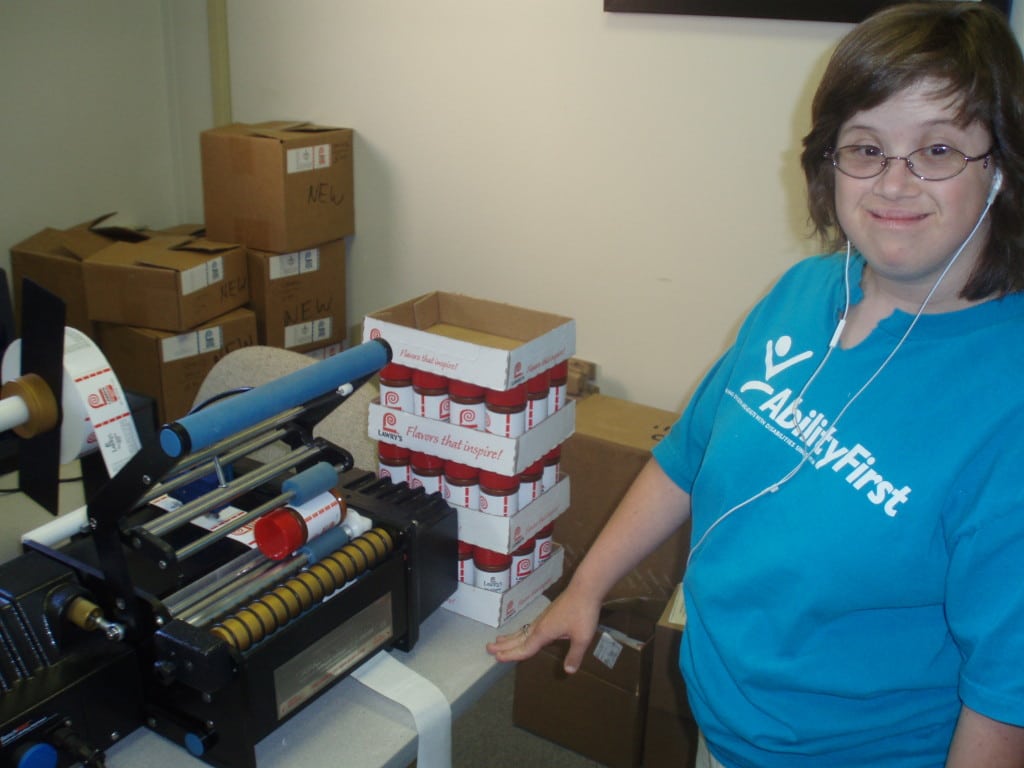
 If you wanted to start a conversation with someone you didn’t know, you might follow steps like these:





 Soccer Routes, a soccer program for ages 2 to 18, is planning to get some new players onto the field – 18-month-olds and their moms!


 Do you still have homework?
 With older children, find time to talk about how it feels moving between Mom’s and Dad’s houses. Ask them what would be helpful, and whether there are certain things that seem to get left behind a lot. Take them shopping for favorite shampoo, soap and other items to send along and leave with the other parent if those things aren’t stocked at the other house. You might wish that your ex-spouse had taken care of this, but it’s more important that your children have what they need to feel comfortable. In Reynolds’ practice, she reminds parents that children might not respond immediately to this type of conversation. Kids don’t always want to talk about these feelings, and might not even know the answers right away. Give them time. Invite them to text you when they think of items they need. This helps keep the conversation going without putting them on the spot.
 The initial separation between you and your spouse is a powerful time with feelings such as anger, sadness, shock and fear coming up regularly. As you move through the divorce process, at times it might seem that you’re walking through a minefield. Holidays, birthdays and other special occasions can bring a rush of unexpected feelings. Handling the daily business of parenting with an ex-spouse can also be loaded at times. It’s not hard to fall into the trap of playing out unresolved marriage issues when dealing with parenting and custody arrangements. Taking time to reflect on where you are in this process and talking through feelings goes a long way toward keeping yourself steady, open and available for your children.
 While you and your ex might have different parenting styles and routines at each house, experts recommend setting some rules to provide consistency in key areas and keep the focus on what’s best for the children.
 Ashley B. Hurdle, M.A., is a registered intern working under supervision in private practice. She is earning her Ph.D. in Depth Psychotherapy at Pacifica Graduate Institute, and is in private practice, seeing individuals, couples, families and teenagers at her offices in Woodland Hills. When away from her practice, she enjoys spending time with her 2-year-old daughter and husband.
 Bice’s oldest son, 9-year-old Pablo, was her reason for seeking out Kurbo. At Pablo’s checkup in July, his pediatrician noticed that he had gained 30 pounds during the previous year and that his weight was putting his health at risk. A friend sent Bice an article about Kurbo, and the family signed up in the fall. “Pablo likes the tracking piece,” she says. “He likes being in charge of putting it into his iPad.”
 As a private tutor in Los Angeles for more than 15 years, I have noticed a significant increase in the number of families we work with who choose the ACT over the more-traditional SAT exam on their path toward college admission. Scores from at least one of these tests are required for admission to most major colleges and universities, and every year thousands of students from Los Angeles schools have to decide between taking one or both exams in hopes of best positioning themselves for admission to their top schools.
 Stephen A. Johnson is the founder of Bright Minds Tutoring,
 The process of agreeing on an Individual Education Plan (IEP) – a document detailing special-education services your public school district will provide for your child – can be an emotional and overwhelming time for families, especially when their idea of what’s best for their child is in conflict with their school district’s evaluations and findings. Offering up some advice for parents going through the process are two mothers who have been going to IEP meetings and advocating for their children with special needs for years, Dina Kaplan and Nicte Mack.

 Women’s History month celebrates the great accomplishments of women and reminds us that women rock. My daughter and I recently read a book about a group of women who not only rocked, but could also swing.




 Early detection is the key to helping children on the autism spectrum realize their full potential. Experts tend to agree that autism can be reliably diagnosed at age 3, when symptoms are present. Infants’ behavior is much more limited, making earlier detection a challenge, but researchers at UCLA are hoping to learn enough to change that.




 Non-suicidal self-injury, also known as “cutting” because that is the most popular form it takes, is frighteningly common among kids – though the problem is difficult to study. Some researchers believe that as many as 10 percent of 8-12-year-olds have attempted self-injury.
 As a child growing up in America, life can be difficult when dealing with a disability or birth deformity. These are children who had no choice in their heredity, but now are committed to a lifetime of coping with being “different.” For those whose deformities cannot be concealed, it is an even bigger challenge that they face — a challenge that most people will never understand.
 When the school year began and you buttoned up your precious ones against the fall chill, kissed their cheeks and sent them off with the latest back-to-school goodies, did you make a silent vow that, this year, you would get more involved in your child’s school?
 You don’t have to sign up to be the official room parent in order to volunteer. It isn’t an all-or-nothing proposition. Simple things including chaperoning a class field trip, tearing out a class set of perforated book sheets, labeling nameplates, stapling papers sent home with your child or sorting materials for science experiments can really help out. Have an hour a month to do drills with the math team before school? Maybe 30 minutes after school to paint sets for the school play? Every bit of help can go a long way with your kids and school personnel.
















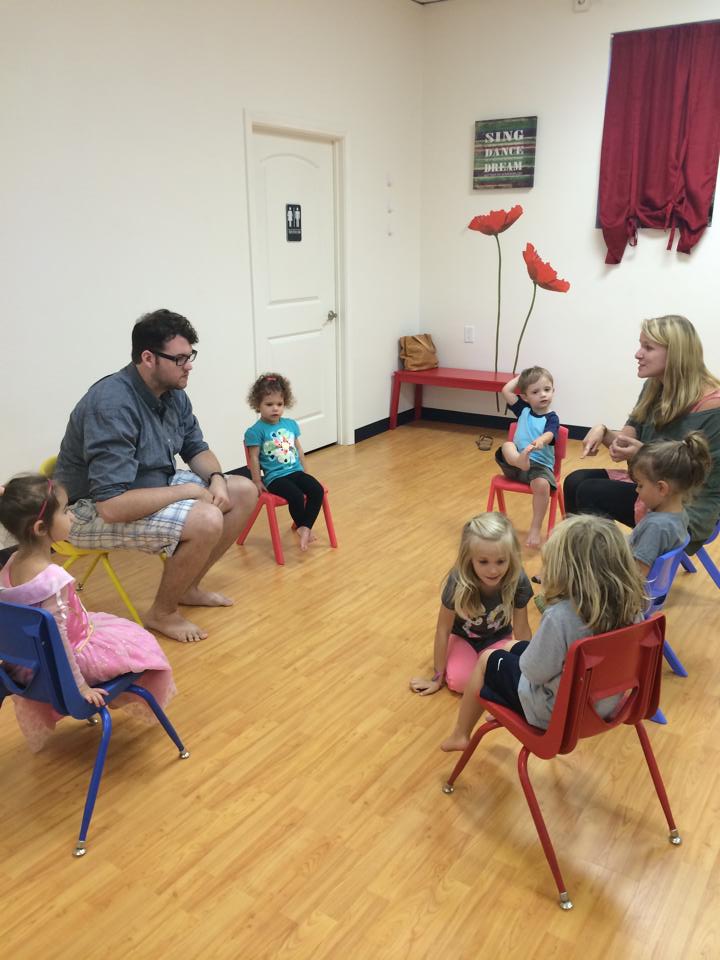





 Move over sugary drinks, there is a new enemy in the war against childhood obesity. Pizza.
 When I became a stepmom eight years ago, there were few resources to guide me over the rough spots in my new life. I read the only thin book I could find on the subject of parenting step children, and its bottom line was: “It’s the hardest job you’ll ever have and no one will ever thank you for it.”






 Despite challenges, children with various disabilities can and do learn to play musical instruments and can be involved in school music programs. Music teacher Stephen Zdzinski, in his article “Instrumental Music for Special Learners,” states, “Instrumental music teachers can successfully teach learners with a variety of disabilities to play band and orchestral instruments by making minor modifications to traditional instrumental teaching techniques and by employing techniques used primarily in special education.”
 Sharlene Habermeyer, MA, has spent more than 25 years researching the impact of music on the brain development of young children. She is the mother of five, and her third son, Brandon, struggled with speech and language delays, auditory processing, visual motor, visual perception, sensory motor and attention deficit disorder. The above is excerpted with permission from her book “Good Music Brighter Children, which she re-published in 2014. Visit her online at
  I know what you’re thinking. There’s no such thing as grocery shopping with one baby, let alone three. But I have my parenting ways. That is because I ask for help.





 Cold and flu season is upon us, and that means it’s time to invest in a good thermometer to help protect your children’s health. That’s the advice of pediatrician Tanya Altmann, M.D., Assistant Clinical Professor at Mattel Children’s Hospital UCLA.
 Yes, that was a great song from the movie Frozen, but it works in parenting and in business. Sometimes, giving up control is the best thing you can do. See where things are going, make sure everyone is safe, and just let it go and breathe. Everything will work out spectacularly in the end.






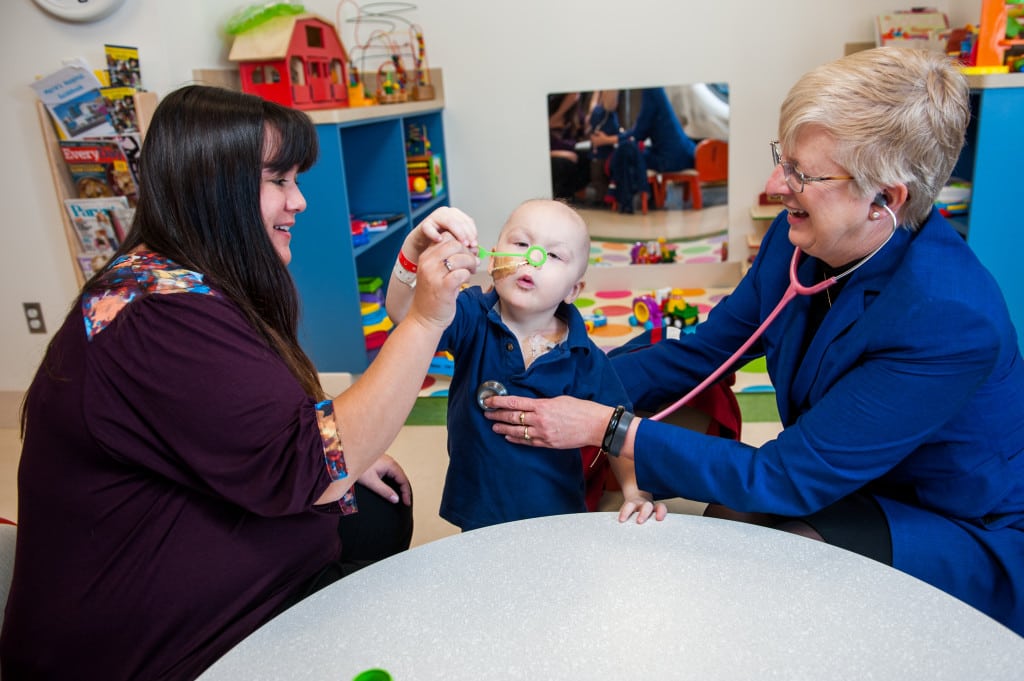








 Where did the day go?
 Laura Brady Saade lives in Los Angeles and is the founder of Give Me 10, a goal-setting and time-management consulting practice. Visit her online at
  For most women, being pregnant is a wonderful experience. Getting prenatal care, eating healthy and exercising regularly are all important to help maternal health and delivery of a healthy baby. While physicians are always checking to make sure that mother and baby are healthy, expectant mothers can help be on the lookout for signs that they may need medical attention.
 Mark Zakowski, M.D., is a Chief of Obstetric Anesthesiology at Cedars-Sinai Medical Center and serves on the Board of Directors for the California Society of Anesthesiologists, the national Society of Obstetric Anesthesiology and Perinatology and the Task Force on Preeclampsia CMQCC, developing guidelines for preeclampsia recognition and management. Visit him online at
  Health is complicated, but simple basics can make a big difference. How and what we eat, how well we sleep and how much we move are important. Use these healthy parenting tips to help your family be well in 2015.
 Jennifer Waldburger, founder of the Sleepy Planet sleep consultation service in Santa Monica, says there is more than one kind of nutrition. “Sleep nutrition” is what she calls a person’s daily dose, because she says sleep is as important as food.
 Making play a habit is the key to getting your well-nourished, well-rested family moving. Get your start by asking your kids what they would like to do. “The biggest thing with kids is finding something they enjoy,” says John Skoryna, owner and CEO of Lionheart Fitness Kids, which brings fun kids’ sports programs to schools, parks and community organizations across L.A. And parent participation is essential.

 The second half of the school year will soon begin, and for many parents that means a return to tests and the fear they instill in our children.
 Most working parents can relate to the desire to be with their children at every milestone. On the other hand, careers often provide satisfaction and a dual income that is important to the family. Mothers and, to an increasing degree, fathers must consider whether or not to stay at home with their children—a choice that can be difficult and very personal.




 Most dental visits are easy and painless nowadays, but scary stereotypes about the dentist persist. For kids who pick up on these stereotypes, fear of dental visits could lead to poor oral health well into adulthood.
 Dental technology has advanced a great deal since you were a kid, so there’s no need for your children to be afraid of a dental visit. Use these tips and find a great dentist who works well with kids and you’ll be on the right path to instilling good dental habits in your kids for a lifetime.
 Welcome to the time of year when we all focus on self-discipline (or at least we try). Recently, psychologist Walter Mischel has returned to both the popular and academic press with research regarding his famous marshmallow test, an experiment involving 4-year-olds and their ability to resist eating a marshmallow placed in front of them in the hopes of receiving a larger reward later. Mischel found that children who were better able to resist the marshmallow had higher rates of income and academic success, as well as lower levels of obesity, as adults.
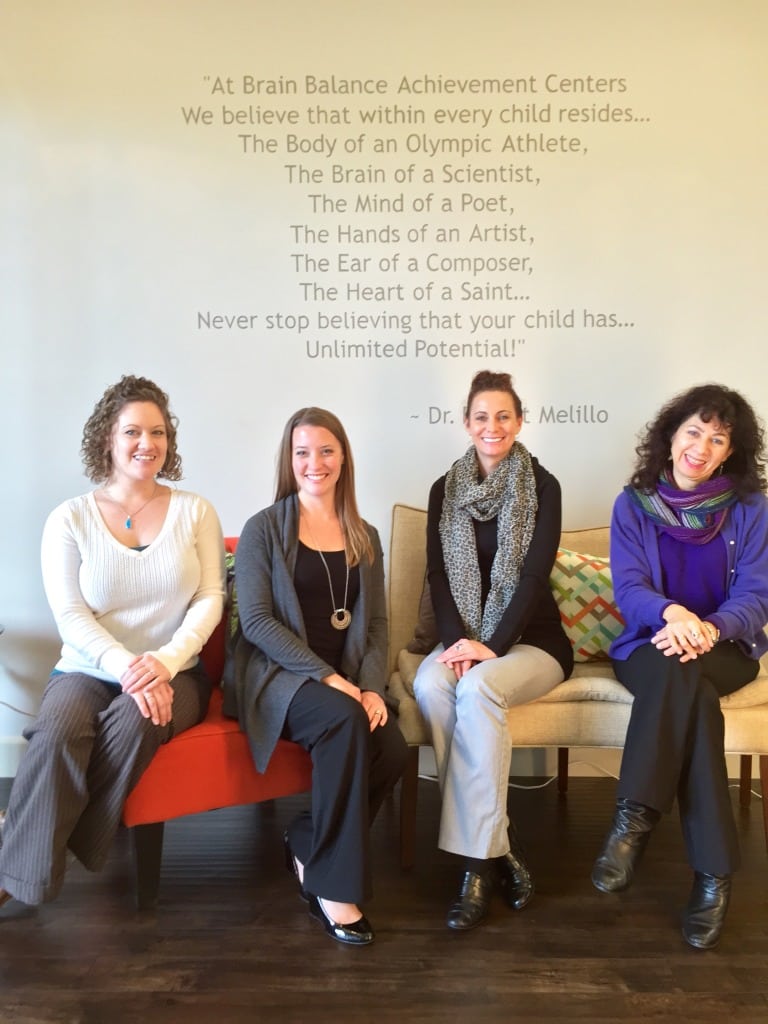 Nothing is more painful than to watch your child struggle. Difficulties in school, trouble making friends, tantrums and meltdowns are tough to observe, especially when you know that, underneath it all, you have a great kid.











 Put a paper towel over your work area to catch spills.
 Palomba, the California-based creator of the book, has been a teacher for more than 20 years, and for the past 11 she has worked exclusively in special education. She wrote “Special Day Cooking” after creating a life skills cooking class for high school students and discovering there wasn’t a cookbook suited to her students.
 Once upon a time, driving down Whitsett Avenue in North Hollywood meant a trip through orchards filled with orange trees, with the occasional billboard adding color and excitement. The orange groves are long gone, and for years the stretch of Whitsett between Sherman Way and Saticoy became an area of blight.

 Building your child’s communication skills is the single most effective way to improve behavior, play and socialization. Children who can communicate their needs, wants, likes and dislikes are much less likely to cry, scream or protest.
 Hilya Delband Tehrani, Psy.D., BCBA-D, has been dedicated to working with children and adolescents with ASD since 1999. As a Psychologist and a Director of Clinical Development at Working With Autism, Inc., she recognizes that the best way to maximize a child’s potential is through developmentally informed, empirically supported, multi-disciplinary practice tailored to the child’s unique profile. Learn more at
 Is your child a student of karate? A competitive young swimmer? A baseball player for the local little league team? If your child has an active lifestyle and needs vision correction, contact lenses might be a better choice than glasses. Let’s look at some of the advantages of contact use for your pediatric champion.



 Recently, a friend asked me, “How do you talk to younger kids who are developing earlier than other children?” His 7-year-old niece started her period and the family wasn’t sure how to talk to her about it. Working in the
  The best advice for any parent is to provide your child a space to voice their frustrations, fears and feelings. Remember what puberty was like for you and empathize with your child as they begin their transformation into adolescence. If you’re having trouble talking to your child about puberty, ask your healthcare provider for suggestions.
 You are at the multiplex with your family and your 13 year old wants to see an ?R-rated movie because “All the kids in my class have seen it and are talking about it. I’ll be left out if I don’t see it!” Do you buy your child a ticket and let them see it without you there to see it with them? Probably not.
 EARLY CHILDHOOD: Content is intended for young children.
 EVERYONE: Content is generally suitable for all ages. May contain minimal cartoon, fantasy or mild violence and/or infrequent use of mild language.
 EVERYONE 10+: Content is generally suitable for ages 10 and up. May contain more cartoon, fantasy or mild violence, mild language and/or minimally suggestive themes.
 TEEN: Content is generally suitable for ages 13 and up. May contain violence, suggestive themes, crude humor, minimal blood, simulated gambling and/or infrequent use of strong language.
 MATURE: Content is generally suitable for ages 17 and up. May contain intense violence, blood and gore, sexual content and/or strong language.
 ADULTS ONLY: Content suitable only for adults ages 18 and up. May include prolonged scenes of intense violence, graphic sexual content and/or gambling with real currency.
 Here in sunny SoCal, hot cocoa is still a favorite, but it’s also ice pop weather almost all year. Health-conscious families can get the skinny on a real treat with this recipe from Mom and Pop Shop, a local, family-owned business that brings all-natural popsicles to events of all sorts. Learn more about them at